Showing posts with label writing. Show all posts

Tuesday, February 21, 2012

Spark Note #4: Finding Good Advice and Ignoring It


I listen to a lot of podcasts; one of the minor perks of my job is the freedom to have my ipod playing while I work, and a podcast can really fill in that ear-time.

One podcast I listen to is Writing Excuses, hosted by four (formerly three) published professionals of various disciplines and areas of expertise. It can be very informative and educational, and I feel like some of the things I've heard on it have pointed things out to me that I had noticed but never really understood. That sort of thing is helpful, I can promise you.

But the best lesson I've learned from this podcast - or from any other source of creative advice - is that people are not generally right about most things. Writing, like any other creative exercise, is completely subjective, even in non-fiction. What one person says is right, even necessary, can be disregarded entirely on a whim and the writing can still be good. Cormac McCarthy does not use quotation marks; this is wrong for many reasons, but his books are still both amazingly written and amazingly successful.

Writing Excuses tends to be more centered on speculative fiction (sci-fi, fantasy, etc.) but the majority of the topics and tips apply to much broader subjects, so I recommend it for just about everyone. And if anything they say sounds wrong, remember that you're allowed to ignore it. You should do things your own way.

Wednesday, October 5, 2011

The Well

I wanted to, I intended to, write a post about how discipline is important for a serious writer. I don't really feel like it now, though.

(pause for laughter)

So anyway, I'm confused about what "going back to the well" means. I've heard it in different contexts: it's said by some writers referring to their means of seeking inspiration, or something of that nature; and it's said about writers, referring to using tried-and-true formulas and existing series/characters that we'd thought were retired and better off for it.

Both uses make sense. It's possible that I misheard one of the uses (the first seems more likely, but I'm pretty sure I've heard it used that way), but it seems to me that both can be, and therefore are, correct.

A writer can go back to the well to refill their psychic water bucket, which they use to help replenish their psychic blood supply after they've been bleeding (psychically speaking) all over the pages they've written on. Writing can be a draining experience, so it makes sense to figure out what it is you can do that helps you feel replenished - and then to go do it once in a while to help keep your creativity regular. Some people work out, or do other physical work like cleaning horse stalls. Some folks take long hot or cold showers or baths, or get a massage or acupuncture. Personally, I tend to just zone out listening to music. It's different for everyone.


The other use is also valid, in a different way, but I suspect that it might be a misinterpretation of the first use. It's usually directed at writers in an accusing fashion.

"George Lucas is going back to the old Star Wars / Indiana Jones well again," they say.

That makes a lot of sense (for figurative language, that is). These properties, characters, etc., what have you, are all proven and reliable. They're like a deep, clean well you know will always have some water for you. You don't need to be super creative; James Bond will sell a few movie tickets, he always has and he always will. You just need to make a few adjustments every decade or so to present him in a way the current audience will like. Daniel Craig happens to be Flavor 007 for the year '006, and it worked out great (best Bond ever, without a doubt).

This is why we get so many sequels, spin-offs, and above all, adaptations of existing properties. The American version of The Girl with the Dragon Tattoo is still set in Sweden, with all the Sweedish names intact, but it's in english with english-speaking actors (Daniel Craig among them - the man can adapt a role, give him due credit there). And it looks great. How much did the writers have to work on the screenplay? A lot less than the late Steig Larsson did writing the book, I'm sure of that.

Is it wrong to tap a well like that? I don't think so; it can be done for the wrong reasons, sure, and you can easily ruin a perfectly wonderful product by continuing to mess with it George Lucas, but adapting, developing, and re-imagining existing characters and stories allows us to explore the concepts in new and interesting ways. If we're familiar with a character, we don't need to develop him or her as much and we can focus on other things, like plot, other characters, interesting themes, or world-bending twists that throw a viral wrench into the familiar setting.

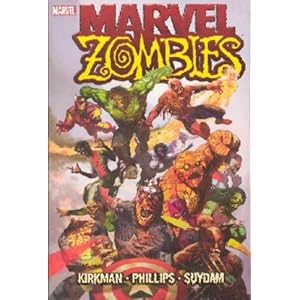
How exactly did the Thing get bit?


Nothing inherently wrong with revisiting an old well. After all, digging a new well is a lot of work, and you can't be sure what the water will be like until all the silt has settled. Still, if you never dig new wells, where will you get water when all the old ones dry up?

Sunday, October 2, 2011

Linkup and Flicker of Inspiration Prompt #19: In The Dark of Night

J. Ross again, the Once and Future Geek, filling in on Flicker of Inspiration duties this week. It's October - time to get ready for Halloween. We put up a bunch of our decorations already. A little too early? I don't think so. Who can say, anyway? Our neighbors maybe. Well, they still have plastic eggs hanging in their tree from Easter so they can just hold on to whatever opinions they have.

Before we get started with all that, though, it's time to link up once again! Last week's prompt was "Objects in the Mirror" - you were supposed to write about something seen in a mirror. It could have been yourself, someone else, a ghost, a car, your evil twin from another universe - the looking glass, as Alice might have said, was wide open.

So (1) link up below; as usual, it will be available until midnight Wednesday, so if you're leaving it for the last minute, that last minute is 11:59 PM on Wednesday. Don't forget to (2) read as many other posts as you can and try to leave three (3) or more helpful or supportive comments. There are free buttons for (4) on the sidebar so you can link back here from your post - as always, (5) spam everyone you know on Twitter or Facebook about the linkup and all the great writing going on, and always come back and see what new posts may have come up.


And now, Flicker of Inspiration Prompt #19: In the Dark of Night
Through October we're going to be doing Halloween-themed prompts. Don't celebrate/participate in Halloween? No problem, our goal is to include everyone and I think there should be plenty of room in all of this month's prompts to take it in different, less-Halloweenish directions.
For this week, think about a dark place. A rural footpath under a waning moon; your Aunt Myrtle's basement with preserved fruits and meats; your apartment building's stairwell in a sudden blackout. Somehow, the Darkness is something that nearly all humans fear. Anything could be in the dark, but the Unknown is the scariest thing of all.
In 1,000 words or less, write something to fit the theme "In the Dark of Night" to share here next week.

Monday, September 26, 2011

Write.


I'm Jeremy, a.k.a. J. James Ross (my intended pen name, by virtue of having had an open URL address), a.k.a. Once and Future Geek. I've been asked to contribute a few thoughts on the subject of writing now and then. I happen to be Katie's husband, but that did not influence Katie's decision to ask me to help out; it was the fact that I "obviously have so much free time" because I "never clean up around the house anyway" and something about listening, or feelings, or something. Anyway.

To start things off, I thought I'd answer, or try to answer, the fundamental question of writing.

"How do you write?"

This is a question. I know this because it ends in a question-mark. Questions should have answers. This question does not.

Saturday, June 25, 2011

Rules of the Road: Some Practical Guidance on Writing Etiquette

There are some fine blogs out there aimed at both writers and aspiring writers. We all utilize writing prompts offered by those sites as useful tools to light a creative spark. Writer’s blogs are also an excellent opportunity to connect with fellow writers and share your work with a diverse group of people. In most cases some members are, in fact professional or free-lance writers, and some simply enjoy writing.

There are people who adopt the title of “writer” that have never attended a class. Of course not everyone needs to attend a class to learn how to write beautifully!  That’s true. Talent is lovely in that way isn’t it? But there’s one thing that surrounding yourself with a group of talented and nurturing writers can do…it can teach you how to be open-minded - to accept that we don’t all share the same writing style, voice, subject matter or interests.

It can be discouraging for the person who takes the leap and tentatively shares his or her first piece publicly only to receive half-hearted responses or thoughtless critiques incorrectly called “constructive criticism.” Too often, the constructive criticism delivered via writing link ups ends up being poorly worded. In the end, that “concrit” begins to look like nothing more than plain old criticism.

It’s also disheartening to put yourself out there and comment on the work of others, only to get nothing in return.

Part of the problem is that the words ‘constructive criticism’ are casually tossed around but they’re never really explained. The best way to respond to a piece is by reading it with the following in mind:

·         Syntax: the arrangement of each part of a sentence. Are sentences logical in terms of subject, verb and object placement? In essence, syntax is why a sentence makes sense to the reader. If a sentence doesn’t make sense, there’s likely a syntax error.

·         Metaphor: a figure of speech, the association of two objects, or figurative comparison of two things emphasizing their similarities.

·         Rhythm: basically, this refers to sentence variety. Do you want to hear the same song verse over and over again or do you want to hear a variety of verses? Sentences of the same length, containing too many adverbs or alternatively, a series of short sentences gets dull. Layer your sentences and weave them together to create something beautiful. Sentence variety creates a fantastic rhythm.

·         Organization: is the piece following a logical order? Yes? Then it is well organized and easy to follow. That said, some writers take the reader back and forth between past and present and this is done purposely. It can be tricky to organize and people who are simply skimming the work might get lost and say something like, “I had a hard time following.” Unless multiple people voice the same constructive criticism, you can probably rest assured that you have experienced a ‘skimmer’.

·         Word use: This one is pretty self-explanatory. Do the words make sense in the situation? Is there word redundancy?

·         Idiom:  a dialect, language or style of speaking pertinent to a particular region or people.

Critiques, when rendered thoughtfully, contain the reasons why you liked a piece as well as the reasons you don’t – again referring to organization, continuity, rhythm, syntax and metaphor. These aren’t hard and fast rules, but should certainly be considered if you are rendering constructive criticism on a piece.

Perhaps the biggest downfall of writer’s link ups is that constructive criticism has somewhat of an air of anonymity attached – even if your name and/or blog is visible. The best thing to ask yourself, when posting a comment is this: how would I say this if the writer was sitting in front of me? Unfortunately, we don’t have the opportunity to deliver our critiques in person, making everyone a little less accountable for their responses to a writer’s work.

By the same token, if you joined a writing group, one that met in person, would you ignore the work of a few writers entirely? Would you only take the time to comment on the work of the people you know? Would you deliver a thoughtless commentary on the reasons why you think the piece is terrible? Would you assume that you are more of an expert in writing than everyone else in the class? If you are a reasonable person, the answers to those questions are probably no.

You never really know the credentials of the person you’re critiquing. For example, I recently read an uninformed (and inaccurate) critique on the work of what turned out to be a published and highly-educated writer. Every writer needs constructive criticism, but it is hard to take seriously if it is delivered in a sophomoric, thoughtless manner.

Experts and professionals working in a creative environment, deliver their comments respectfully. Experts and professionals form a community that is nurturing. While it might be difficult to read and comment on the work of everyone who links up at a writer’s blog, consider taking the time to carefully read and thoughtfully comment on at least three. You’ll make someone’s day.